


.jpg)
15 Hosting Habits That Make Every Gathering Better
Nobody walks into their first dinner party feeling ready. You overbuy food. You scrub rooms nobody steps into. You spend the last twenty minutes before guests arrive pressing wrinkles out of cloth napkins, convinced someone will notice the fold.
Then, somewhere around gathering number five or six, a quieter realization settles in. Guests notice completely different things than you expected. The candlelight. The music already playing when they walked in. How they felt in those first thirty seconds. The menu? They forget by Tuesday.
The hosting tips that actually change things aren't shortcuts. They're the unglamorous lessons you earn through repetition and the ones that make you want to gather again next weekend instead of collapsing onto the couch and swearing off dinner parties forever. Here are fifteen habits we'd hand to anyone who wants to host more and spiral less.
1. Start the music before anyone arrives

An empty house feels different when there's music already playing. It fills the silence that makes early arrivals awkward and gives you something to move to while you're lighting candles and opening wine. Pick something warm and unobtrusive — nothing that demands attention, nothing that competes with conversation.
Jamie Han of Hamkke Home described it simply in her Host How I Host interview: "I love starting with small bites that feel already enjoyed, pouring a drink as guests arrive, and having music playing right away. It makes guests feel welcome and relaxed."
Spotify's Guests Arriving playlist does exactly what the name suggests. Put it on fifteen minutes before the first doorbell. The atmosphere starts before anyone's taken off their coat. As the evening shifts, move into something softer — a Dinner Party playlist that warms the room without raising its voice, then a Wind Down playlist when someone opens the third bottle and nobody's checking the time.
2. The thing guests actually remember

Nobody leaves a dinner party talking about the chicken. They leave talking about the conversation, the laughter, the way the evening somehow stretched past midnight without anyone glancing at a phone. The food is important, but only because it makes people feel cared for.
Marcie Pantzer of Dear Annabelle captured this in her Host How I Host feature: "I believe that parties are all about the people, so I start with the guest list." Every decision after that — the menu, the music, the table — exists to support the people in the room.
3. Cook something you've made before

There is a particular kind of panic reserved for staring at a smoking pan while eight people sit in your living room, wondering if takeout might actually save the night. New recipes are for Tuesday evenings when the only audience is a partner who's contractually obligated to be generous.
For a gathering, cook what you know. Confidence registers more than novelty. Guests would rather eat a roast chicken you've made ten times than a technically ambitious dish you're meeting for the first time.
This is where a Partytrick Playbook earns its keep. A Pasta Night Playbook hands you a menu, a shopping list, and a timeline that's already been tested with no improvisation required.
4. Set the table in the morning

It only takes a few minutes, but it changes everything. Instead of racing to finish the table just before everyone arrives, you get to spend the afternoon knowing it's already done.
Meg Young of Cailini Coastal names this as one of her anchoring rituals in her Host How I Host interview: set the table early so the day-of feels calm. Light a candle before anyone arrives. It's a small thing, but it changes the way the house feels.
5. Buy more ice than you think reasonable

This might be the most practical piece of party planning advice anyone will ever give you, and it sounds absurd until the first time you run out.
Ice disappears into drinks, beverage tubs, water pitchers, and somehow also onto the floor because someone dropped three cubes reaching for a bottle. Buy two extra bags. If you don't use them, you will next time. A simple beverage tub on the counter keeps a few bags within arm's reach.
6. Serve one drink, and serve it well
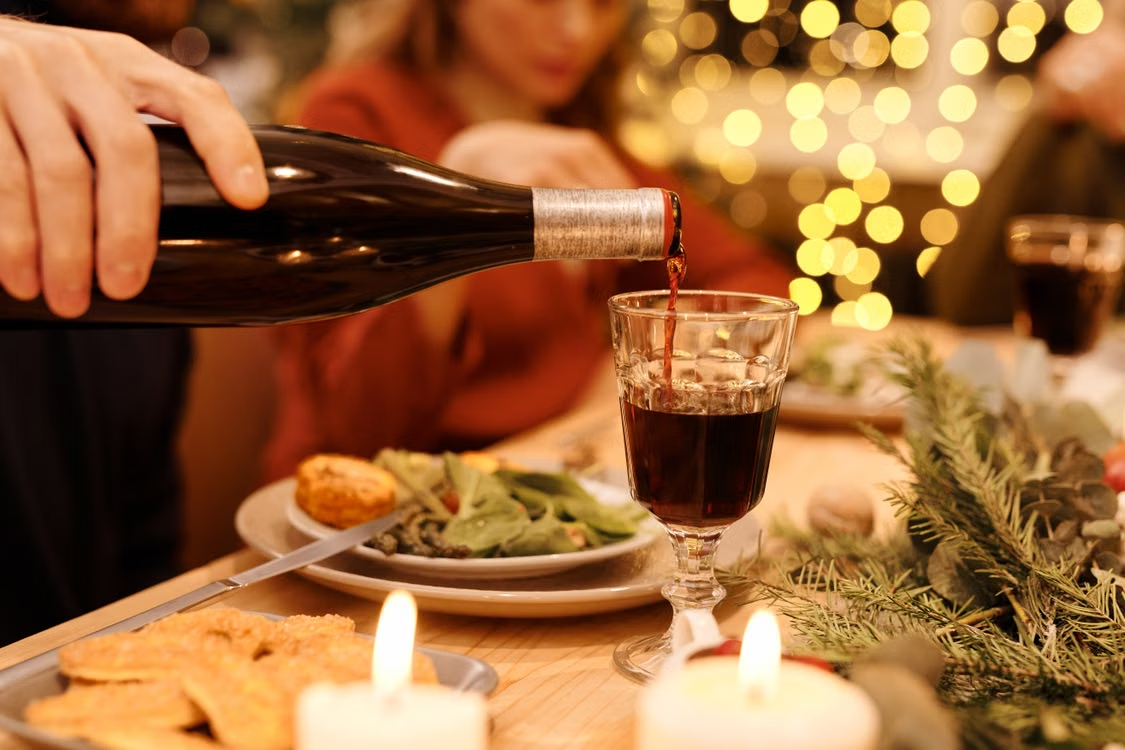
A full bar sounds generous, but it creates indecision and a trail of half-finished glasses abandoned on windowsills. Pick one drink — a batch cocktail, a specific wine, a spritz that takes thirty seconds to pour — and make it the obvious choice. Have a non-alcoholic option that feels equally considered, like a citrusy sparkling water or a proper mocktail.
In her Host How I Host feature, Samantha Sarine puts it this way: "I like to start every gathering with a signature cocktail or welcome drink (even a mocktail). It's a small but meaningful gesture that immediately puts guests at ease." Hand someone a drink you're excited about, and they'll feel the thought behind it.
For inspiration, browse summer wines under $25 guests always love or our favorite non-alcoholic drinks for hosting.
7. Light matters more than any decoration you'll buy

Harsh overhead lighting makes people feel like they're at a work meeting. Candles, table lamps, and dimmers — Marcie Pantzer's favorite party trick, incidentally: "Dimmers!" — do more for a room than any arrangement of flowers. Warm, low light makes everyone look better, talk longer, and relax faster.
If your space only has overheads, a few rechargeable table lamps and a cluster of candles from the Partytrick Marketplace will transform the room in under three minutes.
8. People gather where the food is
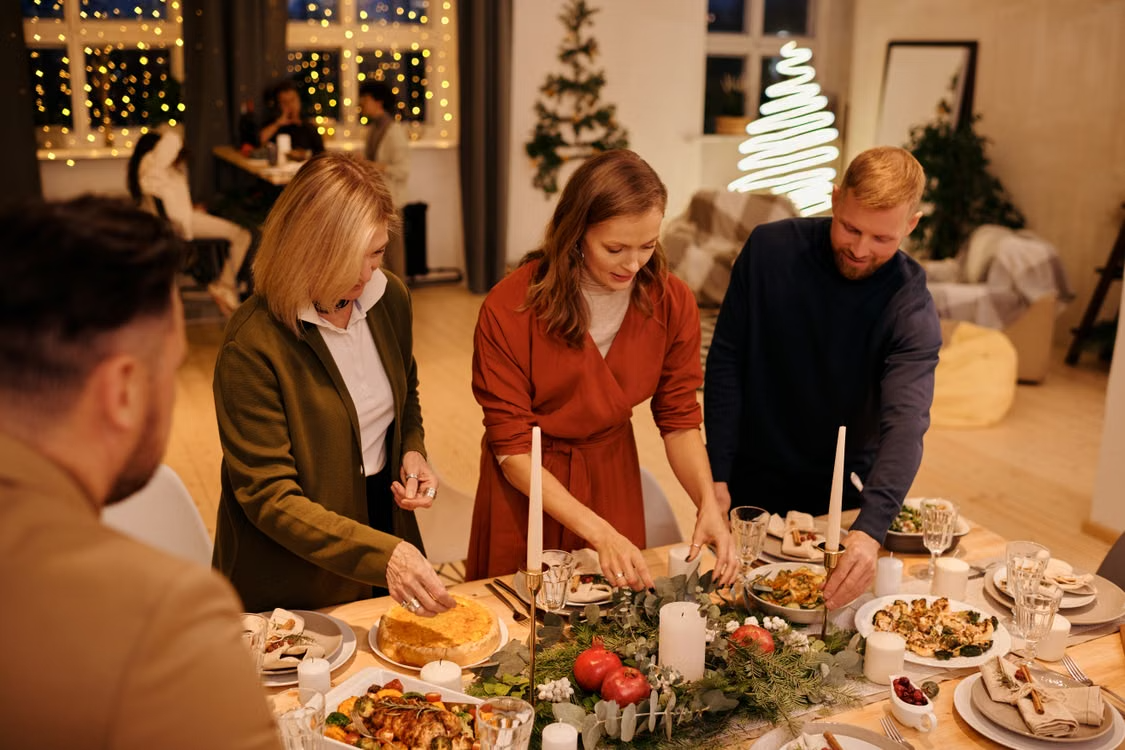
Stop rearranging chairs and assigning seats. Nobody stays where you put them. They drift toward the kitchen, the platter of cheese, the open bottle on the counter. Put the food somewhere central and let the evening organize itself around it. The best seating arrangement is the one guests create naturally when there's something worth standing near.
For a gathering that's built around this principle, a Taco Night or Pizza Night Playbook keeps everything casual and communal — people assemble their own, linger near the toppings, refill without ceremony.
9. Dinner can be fifteen minutes late
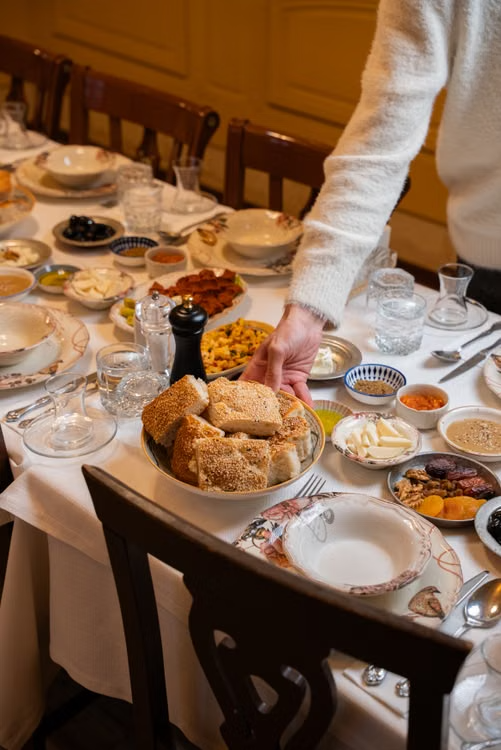
Nobody is timing you. If dinner hits the table at 7:15 instead of 7:00, the only person who knows is you.
The guests are deep in conversation, halfway through a drink, and genuinely unaware that you had a schedule in the first place. Give yourself buffer time, and when things run behind, resist the urge to narrate it. The evening doesn't need a play-by-play.
10. Store-bought is the smarter move

A great bakery dessert served with no apology beats a rushed, uneven homemade one served with five disclaimers about what went wrong in the oven. The same goes for a good loaf of bread, jarred olives, a wheel of cheese you didn't age yourself. The goal is generosity, not a cooking competition. Some of the best entertaining tips are about knowing what's genuinely not worth the stress.
11. Put out food the moment guests arrive

The first fifteen minutes set the pace for the entire evening. If guests walk in and there's nothing to eat, they hover. They check their phones. They ask if they can help when what they really mean is I don't know what to do with my hands.
A bowl of marinated olives, some nuts, a plate of something that looks intentional but took five minutes — it doesn't take much. You just need a reason for people to gather around a surface and start the night. A beautiful serving bowl does half the work for you — fill it with something simple and the table already looks considered.
12. Find your go-to gathering
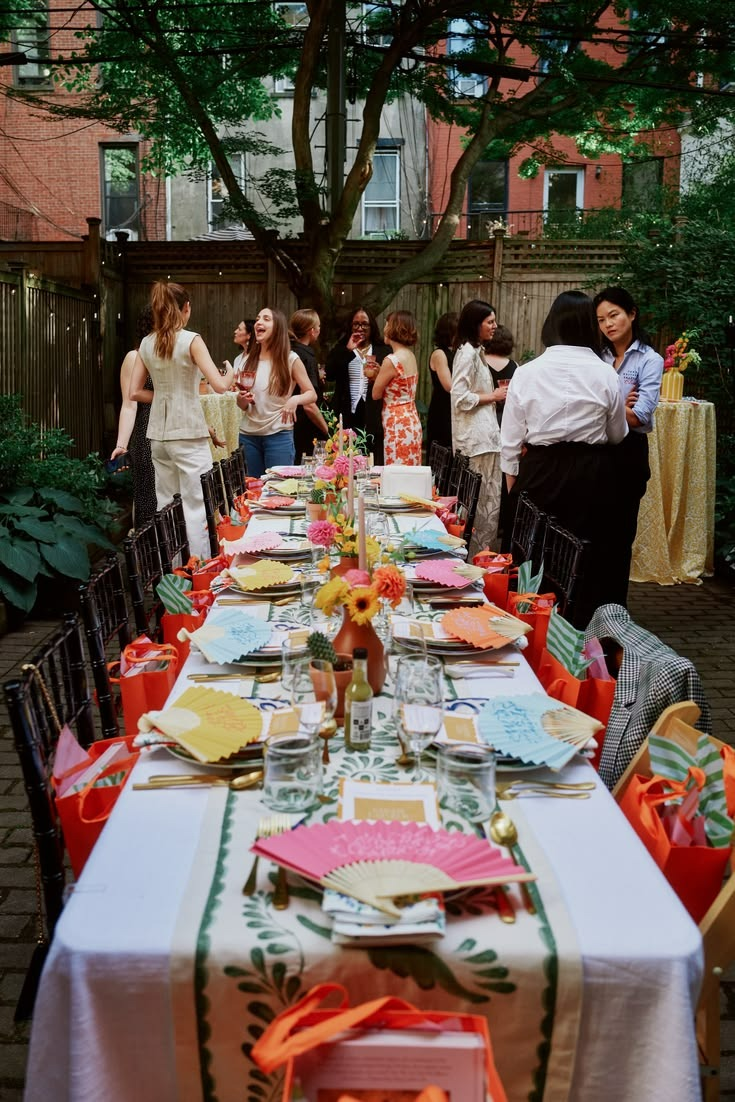
The hosts who gather most often aren't reinventing the wheel.
They have a formula: a recurring format they've made enough times to run on instinct. Taco night. Pasta night. A summer brunch that barely changes from June to August. These become traditions guests look forward to, and they're infinitely easier to pull off because the decisions are already made.
This is Partytrick's whole philosophy around having a go-to gathering.
Playbooks like Pizza Night, Backyard Dinner Party, Wine & Cheese Night, or Golden Hour Gathering give you a tested menu, timeline, and shopping list in one place. That repeatability is what turns hosting from a once-a-season event into something that feels like part of your rhythm. For more ideas, explore the summer gathering trends shaping how people are hosting right now.
13. Spend less time apologizing
The best hosts don't point out what went wrong. They don't apologize for the slightly overcooked pasta, the dessert that didn't set, or the chair that's been broken since March. Guests didn't notice until you mentioned it — and now they're performing reassurance instead of enjoying their wine. Confidence is a quiet part of hospitality. Let the imperfections exist without commentary.
Janie Lemons, in her Host How I Host interview, learned this the hard way: "Early on, I always tried to be Martha Stewart with everything dazzling and perfect, but it was too much pressure. Half the time, people do not even notice the things you're stressing about."
14. Guests love to help

Not everything needs to be done behind the scenes. Hand someone a bottle of wine to open. Ask a friend to slice the bread. Let the person who offers to clear plates actually clear plates. Hospitality isn't a solo performance; it's something that happens between people.
The best gatherings don't have to rest on one person's shoulders. Letting guests contribute is part of what makes the evening feel shared.
15. The gathering doesn't have to be perfect to be memorable

Some of the best dinner parties — the ones people talk about years later — were the ones where something went sideways.
The power flickered, and everyone sat by candlelight for an hour. The roast took forty extra minutes, and appetizers became the main event. Nobody remembered the flaw. They remembered staying late, laughing hard, feeling like the night somehow belonged to them.
The dinner party tips that actually matter aren't about getting everything right. They're about creating a room where people feel relaxed enough to stay a little longer, pour another glass, tell a better story. You don't need to nail all fifteen of these. Pick two. Try them. The rest comes with practice.
Commonly asked hosting questions
What's the easiest way to host a dinner party for the first time?
Start small: four to six people. Cook a main dish you've made before. Buy dessert. Put music on before guests arrive. That's it.
For first dinner party tips, the most important rule is to lower the stakes. Nobody expects a first gathering to look like a magazine spread, and the people who love you will be happy just to be invited. A Dinner Party Playbook can help you organize the details without overthinking them.
What's the most common mistake new hosts make?
Trying to do too much.
New hosts tend to add dishes, decorations, and timeline pressure that experienced entertainers have learned to let go of. Janie Lemons describes it as trying to match a standard nobody else is holding you to, and the result is exhaustion, not connection. Pick three priorities and let the rest be simple.
How can I entertain without spending a lot of money?
Candlelight costs almost nothing. A batch cocktail is cheaper than a full bar. Pasta for eight costs less than individual proteins. And the most generous thing you can give guests — your attention — is free. For more easy entertaining ideas, read 15 small luxuries that make guests feel welcome.
Every host who makes it look effortless started exactly where you are. The difference isn't talent or money or a bigger kitchen. It's simply that they've done it enough times to learn which details carry the evening and which ones are just noise. Hosting gets easier every time you do it — not because you eliminate every mistake, but because you stop believing a mistake will ruin the night.
If you're planning a gathering soon, Partytrick's Playbooks are a good place to start. From a Backyard Dinner Party and Bestie Night to a Summer Brunch or Golden Hour Gathering, each one gives you a complete roadmap so you can skip the second-guessing and focus on the part that matters: showing up for your people.
Create a free Partytrick account at partytrick.com and browse the full library of Playbooks. Save the ones you love, build your own collection of favorite gatherings, explore Marketplace recommendations, and keep your planning organized — without the overwhelm.
Want more hosting ideas, seasonal inspiration, and curated finds in your inbox? Subscribe to the Partytrick newsletter for new Playbooks, product discoveries, Marketplace finds, and editorial stories that help you gather with more confidence and a little less stress.
More articles
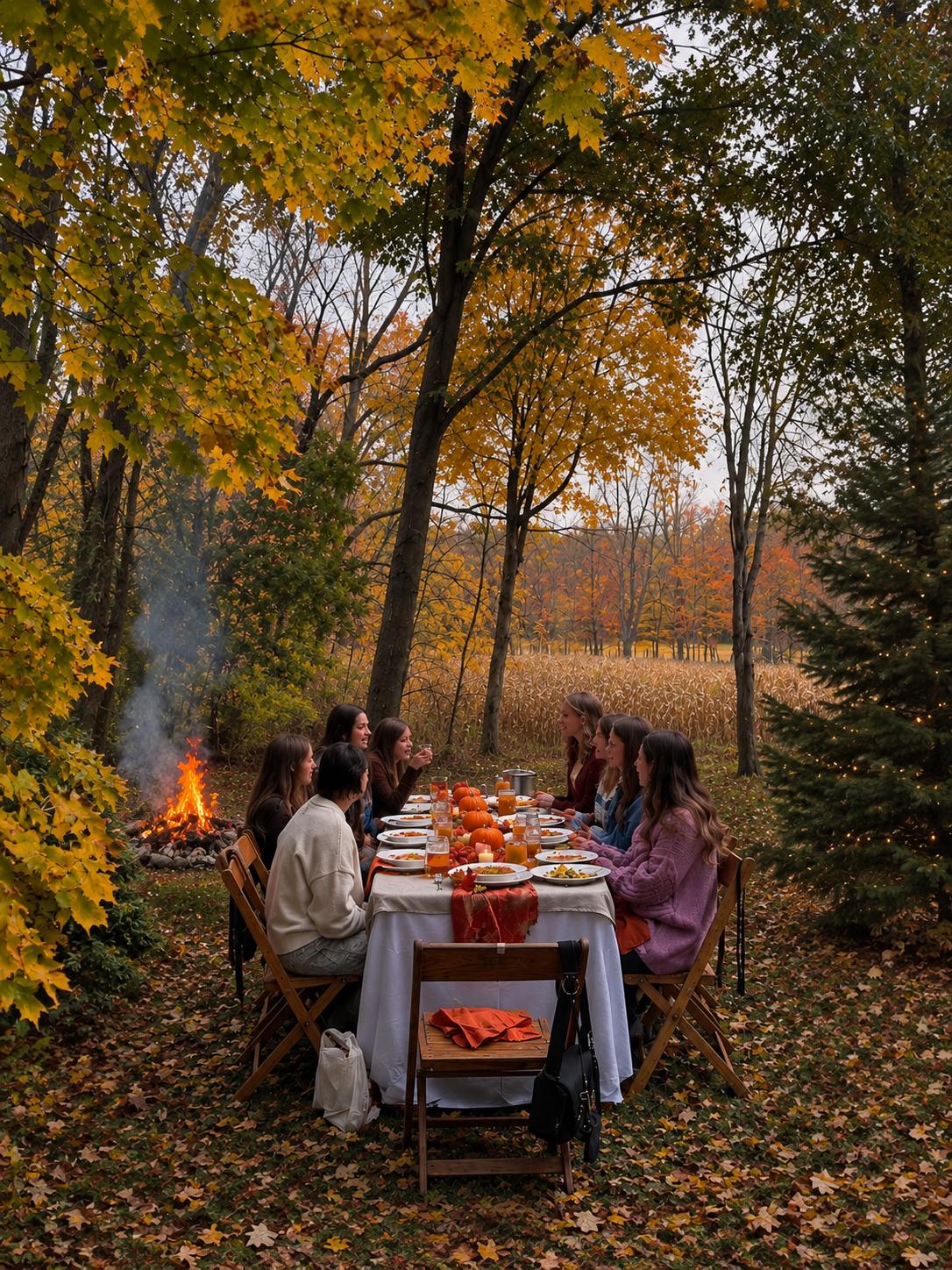
Five Gatherings to Put on Your Calendar This Fall
Plan meaningful fall gatherings with ideas for a dinner party, soup night, a football watch party, a cider tasting, and a cozy game night.


Host How I Host: Jen Lagedrost Cavender on Creating Immersive Gatherings
For Jen Lagedrost Cavender of Nectar & Bloom, memorable hosting begins with a theme and blooms through flowers, thoughtful details, and playful ways for guests to connect. Her approach proves that an immersive gathering can feel elevated without becoming overly complicated.

Ask Partytrick: What Do You Do When Guests Don't Know Each Other?
Practical, low-pressure ways to help guests who don't know each other feel comfortable, from thoughtful introductions to a room that makes conversation easy.
Sign up for expert tips, exclusive content, and the 411 on the latest parties—all straight to your inbox.
Your shortcut to stress-free hosting
Spend less time coordinating and more time actually connecting.