


.jpg)
Hosting a Back-to-School Coffee Morning at Home
The beginning of the school year asks a lot from families. Kids are adjusting to new classrooms, new teachers, new routines, and sometimes new friendships. Parents are doing their own version of the same thing: learning drop-off patterns, remembering forms, tracking early dismissal days, and trying to put names to faces in the hallway.
A back-to-school coffee morning gives parents an easy way to connect before the school year gets busy.
It does not need to be a full brunch, a decorated event, or a perfectly planned morning. In most cases, a pot of coffee, something simple to eat, and a welcoming home are enough. The purpose is not to impress other parents. It is to make it easier for people to talk, exchange names, and begin building the kind of everyday school-year connections that make everyone feel a little more supported.
If you have been wanting to meet more parents but are not sure how to start, hosting a small coffee morning after drop-off is one of the simplest ways to do it.

Keep the Guest List Small
A parent coffee gathering works best when it feels easy to join. That usually means keeping the group small enough that people can have real conversations without feeling like they have walked into a large neighborhood event.
Six to ten parents is a helpful range. It gives the room enough energy without making introductions feel overwhelming. A smaller group also makes it easier for quieter guests, new families, or parents who do not know many people yet to participate naturally.
As you build the guest list, think about mixing a few familiar faces with a few new ones. You might invite parents from your child’s classroom, a family you keep seeing at drop-off, or someone you met briefly at orientation. If your school community overlaps across grades, it can also be thoughtful to include parents from nearby classrooms or sibling grades, especially if those families will see each other often throughout the year.
The goal is not to invite everyone. It is to create a setting where everyone who comes has a reasonable chance to be included in the conversation.
If you are unsure how to phrase the invitation, keep it simple:
I’m having a few parents over for coffee after drop-off next Thursday. Very casual, just coffee and something small to eat. I’d love for you to come if you’re free.
That kind of invitation sets the tone right away. It tells guests they do not need to dress up, bring anything, or clear their whole morning. They are simply being invited to connect.
Pick a Time That Fits the School Day
Timing matters more than almost anything else when you are hosting parents during the school year. The easier the gathering is to fit into an existing routine, the more likely people are to come.
Right after school drop-off is usually the most natural choice. Parents are already out of the house, many have coffee on their mind anyway, and the transition from school to your home can feel simple. If drop-off ends around 8:15, you might invite people for 8:30. This gives everyone a little buffer without stretching the morning too far.
Keep the gathering to about an hour. A short window makes the invitation feel manageable for parents who have work, errands, younger children, or appointments later in the morning. You can always let the conversation continue if people are relaxed and available, but the stated plan should feel easy to say yes to.
Weekdays tend to work best because families are already in school mode. A Tuesday, Wednesday, or Thursday morning often feels less crowded than Monday, when everyone is catching up, or Friday, when schedules can become unpredictable.
Send the invitation a week or two in advance if you can. This gives parents enough time to plan around it without making the gathering feel overly formal. If someone says they may need to leave early, make that feel completely fine. For a back-to-school coffee morning, flexibility is part of the hospitality.
You are not asking people to commit to a long event. You are giving them a simple place to pause before the day takes over.

Create a Comfortable, Relaxed Setup
For this kind of gathering, atmosphere matters more than decoration.
People remember whether they felt comfortable, whether conversation came easily, and whether they knew where to sit or pour another cup of coffee. They are much less likely to remember if the napkins matched the flowers.
Start by choosing one main area for guests to gather. This might be your kitchen table, a few chairs around the living room, or a mix of dining chairs and stools near the coffee station. The important thing is to keep people close enough that conversation can include the whole group at first. If seating is too spread out, guests may naturally separate before they have had a chance to meet.
Let in natural light if you have it. Open curtains, clear a little space on the counter, and remove anything that makes the room feel too busy. You do not need to deep clean the whole house. Focus on the entry, the bathroom guests will use, and the area where people will sit.
Soft background music can help the room feel warm when the first few guests arrive. Keep it low enough that no one has to talk over it. A calm playlist is especially useful during the first ten minutes, when people are arriving one by one, and conversation is still finding its rhythm. If you have a favorite Partytrick playlist for brunch or daytime hosting, this is a natural moment to use it.
This is also where a thoughtful host’s perspective can be helpful.
In Jessica Sloane’s Host How I Host feature, her approach to intentional celebrations, ambient lighting, and small details that help guests feel welcome offers a useful reminder: the best gatherings are often shaped by how people feel in the room, not by how much is on the table.
Fresh flowers or greenery are lovely if you already have them, but they are not required. A small vase of grocery-store flowers, a few stems from the yard, or even a tidy bowl of fruit can make the space feel considered without adding much work.
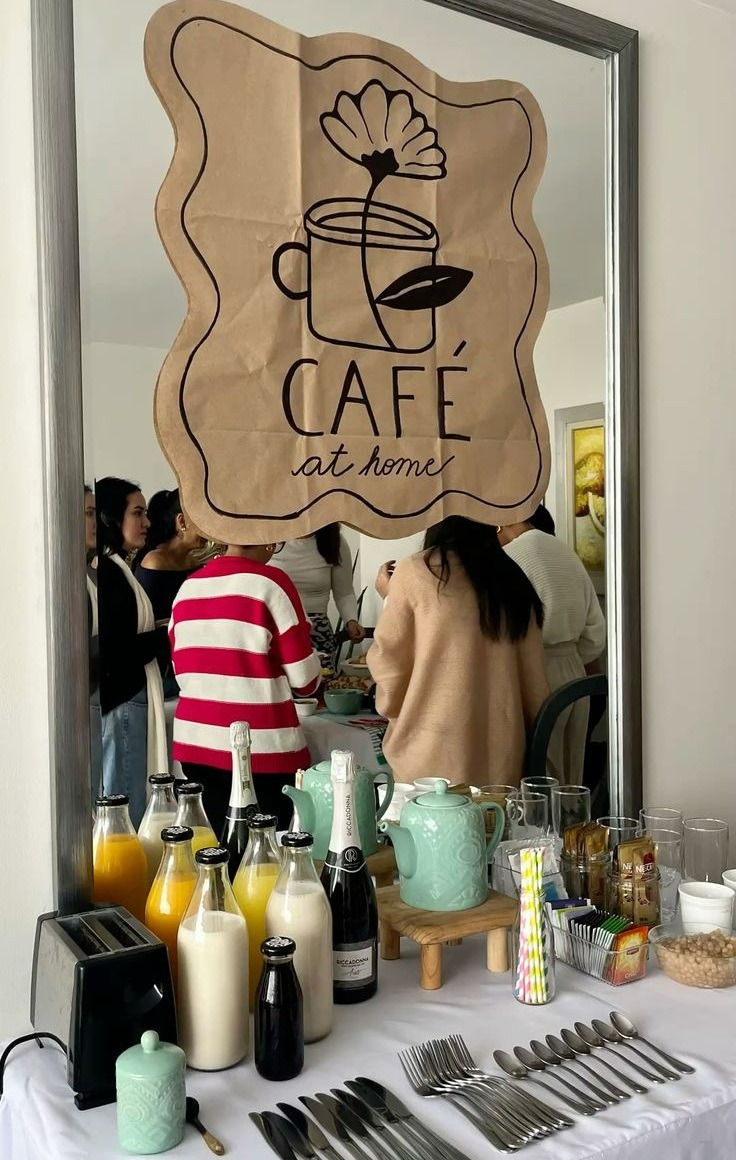
Set out the coffee, tea, cups, and food where guests can easily reach them. A simple self-serve station keeps you from having to ask every person what they need the moment they walk in. It also gives guests something to do with their hands, which can make those early introductions feel more relaxed.
If you want more structure for a casual morning setup, the Partytrick Playbook Library is a helpful place to browse for brunch ideas and low-lift hosting inspiration that you can adapt to a school-day schedule.
Serve a Simple Menu
A back-to-school coffee morning does not need a complicated menu. In fact, a simple one is usually better. Most guests will have already managed breakfast for kids, packed lunches, and school bags before they arrive. What they need is something pleasant, easy, and not too fussy.
Start with coffee and tea. If you have regular coffee, decaf, and a few tea options, you are covered. Add milk, a non-dairy option if you have one, sugar, and maybe honey. Put everything together in one place so guests can help themselves.
For food, choose items that can be made or bought ahead of time. Fresh fruit, muffins, pastries, banana bread, coffee cake, and yogurt parfaits all work well. If you want something savory, mini quiches or a simple egg bake can be prepared in advance and warmed before guests arrive.
You do not need all of these options. A good menu might be as simple as:
- Coffee and tea
- A bowl of berries or sliced fruit
- Muffins or banana bread
- Sparkling water or juice
The most important planning question is not: What would make this look impressive? It is: What can I serve without spending the whole morning in the kitchen? Choose food you can put out before the first guest arrives. If something needs attention after people are there, it should be minimal.
Parents are coming for conversation, not a full breakfast spread. A simple menu lets you greet people, introduce guests, and actually be part of the gathering.

Help Conversation Flow Naturally
At the beginning of the school year, many parents are still learning names, faces, and connections. Some may already know each other from previous grades or older siblings. Others may be brand new to the school. A good host helps bridge those gaps without turning the morning into a formal icebreaker.
Start by introducing guests as they arrive. Use a little context when you can:
This is Maya. Her son is in the kindergarten class, too.
This is Jordan. We met at orientation last week.
Small details give people an easy place to begin. They also prevent newcomers from feeling like they have to figure out the room on their own.
Keep conversation starters light and useful. The new school year offers plenty of natural openings:
- How is the first week going for your child?
- Have you figured out the drop-off routine yet?
- Are there any school events coming up that we should know about?
- Does anyone have a favorite nearby lunch spot or playground?
- Has anyone done this grade before and have tips?
Local recommendations are especially helpful because they give people something practical to exchange. Parents might share the best place to park, which after-school activities fill quickly, where to get a quick coffee nearby, or which playground is easiest after pickup. These conversations may seem small, but they are often how real community begins.
Try to notice if the conversation becomes too closed. If several guests are talking about a shared history, an old class, or an inside topic, gently widen the circle. You might say, For those of us who are new to this grade, what should we know about the fall festival? This keeps the tone inclusive without making anyone feel corrected.
The goal is not to manage every moment. It is to create enough ease that guests can find their own rhythm.
Send Guests Home Feeling Connected
A good coffee morning does not have to end when the cups are cleared. One of the best parts of hosting early in the school year is that a small gathering can make future connection easier.
If the group seems comfortable, ask whether people would like to exchange contact information. Be thoughtful about permission. Some parents may prefer email, others may like a text thread, and some may not want to join another group chat. Keep it optional and low-pressure.
A neighborhood parent text thread can be useful if many guests live nearby or have kids in the same class. It can become a place to ask about school spirit days, missing forms, pickup changes, or casual plans for the playground. The key is to keep the purpose clear, so it feels helpful rather than noisy.
You might also suggest another simple meetup. It does not need to be at your house again. A playground coffee after drop-off, a walk after pickup, or meeting at an upcoming school event can keep the connection going without requiring anyone to host repeatedly.
After the gathering, send a short thank-you message.
Something as simple as "Thank you for coming this morning. It was so nice to start the year with a little time together" makes the morning feel more special. If someone was new, a personal note can go even further.
Keep It Sustainable
The easiest way to keep hosting enjoyable is to avoid making each gathering bigger than it needs to be. A back-to-school coffee morning should feel repeatable, not exhausting.
If you enjoyed hosting, consider doing it once each semester instead of monthly. That rhythm gives families a chance to reconnect without creating another obligation on the calendar. You might host in early fall, then again after winter break or before the end of the school year.
You can also rotate homes with other parents. Once people have attended one casual coffee morning, it often becomes easier for someone else to offer the next one. Rotating keeps the effort shared and helps the group feel more like a community.
Keep the menu simple every time. There is no need to reinvent it. Coffee, tea, fruit, and one or two easy baked items can become the familiar formula. In many ways, consistency makes the gathering feel more comfortable. Guests know what to expect, and the host does not have to start from scratch.
Let the group evolve naturally. Some mornings may be lively. Others may be quiet. Attendance may shift as schedules change. That is normal. The point is not to maintain a perfect tradition. The point is to make space for connection in a season when many parents are looking for it.
Hosting becomes easier when it fits your real life. A sustainable gathering is one you would actually be willing to do again.
Start the School Year With a Simple Gathering
Some of the strongest school friendships begin in very ordinary ways: a quick conversation after drop-off, a shared laugh about the morning rush, a cup of coffee at someone’s kitchen table.
A back-to-school coffee morning gives parents a simple reason to slow down and meet each other. It can make new families feel welcome, help familiar faces reconnect, and create the kind of everyday support that makes the school year feel less scattered.
Hospitality does not have to mean serving an elaborate brunch or preparing your home for a crowd. Often, it means noticing that people could use a place to gather, then opening the door in a way that feels manageable.
If you are planning a back-to-school gathering, start small. Invite a few parents, make coffee, set out something simple, and give people room to talk. That may be all the morning needs.
For more low-lift brunch ideas, casual hosting guides, and gathering inspiration you can adapt to real family schedules, explore the Partytrick Playbook Library. You can find ready-to-use plans for brunch, coffee gatherings, school-year get-togethers, and simple ways to make hosting feel more manageable from the first invitation to the final cleanup.
More articles

Halloween Party Ideas from the Pros: How to Host a Night Guests Still Talk About
Ask a professional what makes a Halloween party work, and the answer is rarely just a pumpkin.

Halloween Party Themes for Adults That Go Beyond Costumes
Host a Halloween night built around something your friends will enjoy doing together, with costumes optional. Explore ten adult party themes, with simple food pairings and practical tips to help you choose one that fits your group, space, and budget.

Ask Partytrick: How Do I Host a Halloween Party When Half My Friends Hate Costumes?
Planning a Halloween party when half your friends hate costumes can be simple by making costumes optional and clearly stating the dress code in the invitation. You can center the evening around an activity like a movie night, game night, or pumpkin decorating so everyone feels welcome to join in on the fun.

Sign up for expert tips, exclusive content, and the 411 on the latest parties—all straight to your inbox.
Your shortcut to stress-free hosting
Spend less time coordinating and more time actually connecting.