


How Hosting Is Shifting Right Now (and What That Means for Your Next Gathering)
Hosting looks different from what it did even a year ago. Not because people suddenly stopped caring, but because the pace of life has changed, and the way we spend time together has changed with it.
The gatherings that feel best right now aren’t the ones with the most over-the-top themes. They’re the ones that feel easy to enter, comfortable to stay in, and simple to pull off again.
If hosting has started to feel overwhelming, you’re not alone. The good news is: the shift happening right now is moving hosting in a direction that’s easier, more intentional, and less performative.
Hosting looks different right now—here’s why
For a long time, hosting came with an unspoken job description: plan a full experience, make it look good, keep everyone entertained, and somehow still be present. That’s a lot to carry.
But what people seem to want now is simpler:
- Less pressure to impress
- More focus on connection
- More frequent get-togethers that don’t require a full production
If you want a grounded snapshot of what hosts are prioritizing right now, the Evite “Pregame Report 2026” is a helpful reference point.
When hosting feels doable, it happens more often. And when it happens more often, it gets more relaxed because every gathering doesn’t have to count as something big.
What’s actually changing (and what’s not)
Smaller, more intentional gatherings
Smaller groups make hosting feel lighter. They also make it easier to have the kind of conversation and connection people are craving.
This doesn’t mean you can’t host a bigger crowd; it just means the default is shifting toward gatherings that fit into real life.
Atmosphere matters more than decor
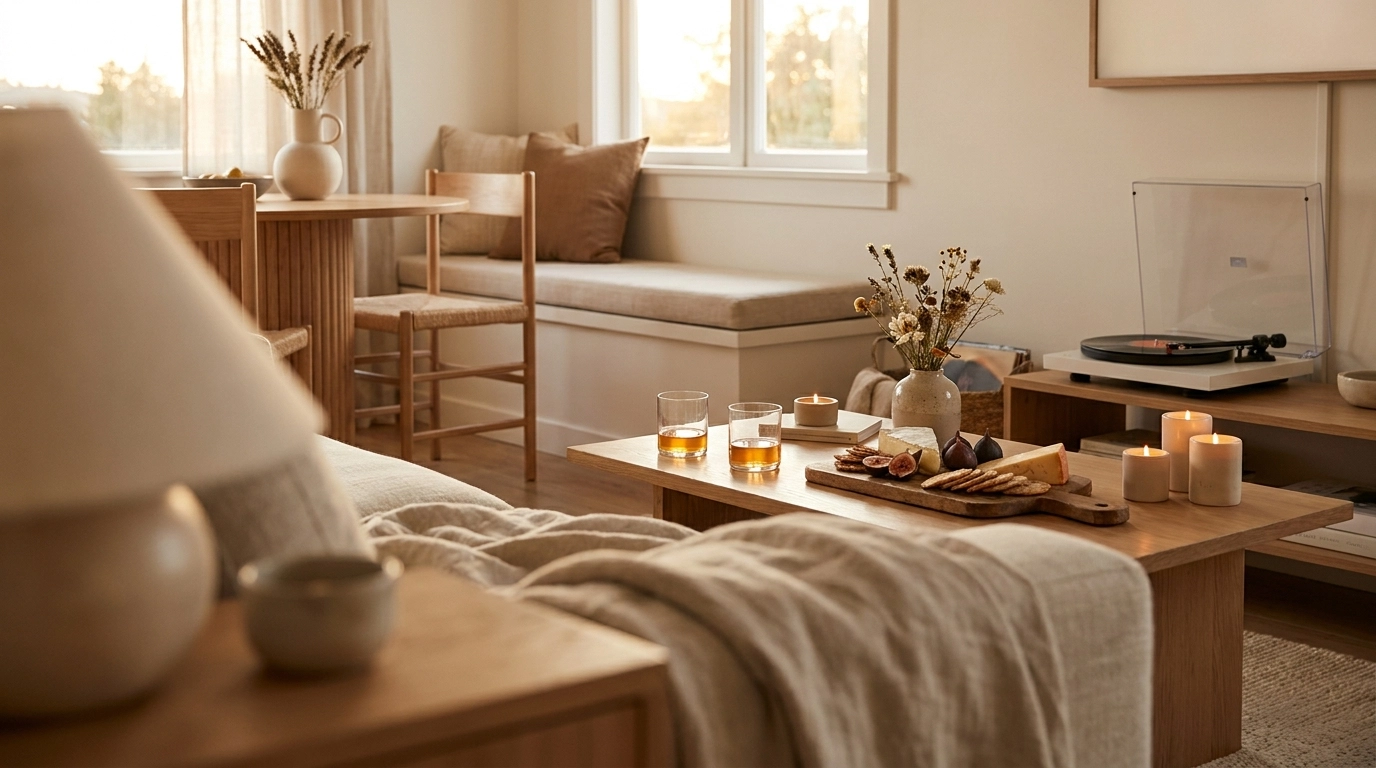
What makes a gathering feel good right now usually isn’t the table styling. It’s the atmosphere.
Think:
- Lighting that makes the room feel calm
- Music that fills the quiet spaces
- A layout that helps people settle in without asking, “Where should I go?”
If guests know where drinks are, where to sit, and where to put their things, they relax faster — and so do you.
Hosting is more relaxed and flexible
There’s less pressure to serve a formal meal. More people are leaning into formats that keep the night moving naturally:
- drinks + light bites
- one-pot or family-style meals
- “help yourself” setups
A relaxed structure still has intention — it just doesn’t require you to manage every moment.
Experiences over entertainment
People still want something to do, but they don’t necessarily want a scheduled activity.
Light interaction tends to work best:
- a simple question card on the table
- a small snack board that people can build together
- one shared “moment” (like a toast, a mini taste test, or a playlist everyone adds to)
The goal is to create easy ways for people to connect, not to keep them busy.
If you want a few low-pressure options that don’t take over the night, see: The Art of the Low-Stress Gathering: 8 Simple Activities to Break the Ice.
Personal over perfect
The most memorable gatherings don’t feel copy/pasted. They feel personal.
That might look like:
- Your go-to drink that everyone associates with your house
- The playlist you always put on when you want the room to loosen up
- A menu that’s repeatable because it’s what you actually like to serve
Perfection isn’t the standard. Familiarity is.
What this means for how you host now
If you’ve felt behind because you’re not doing enough, this is for you: you don’t need to do everything. Instead, focus on 2–3 elements that shape the gathering's feel, and keep the rest simple.
A helpful way to choose those elements:
- One anchor drink (something easy to repeat)
- One anchor food format (something shareable)
- One atmosphere decision (lighting, music, or layout)
Once those are handled, the gathering usually runs itself.
Also: prioritize flow over perfection.
Flow means:
- Guests can find what they need
- People naturally gather in one or two areas
- You’re not constantly moving things around or answering the same questions
If you want a simple baseline to keep you out of scramble mode, this party planning checklist is a great starting point.
How to plan a gathering that reflects this shift
Drinks
Keep it simple and accessible. Choose one of these formats:
- one batched cocktail + one non-alcoholic option
- wine + a fun garnish setup (citrus slices, herbs, a spritz topper)
- a “house drink” that’s easy to serve all night
The goal is to avoid playing bartender.
Food
Aim for easy, shareable, low-effort. A few formats that work well right now:
- Grazing-style boards (one savory, one sweet)
- One main + one or two add-ons (like a pasta dish + salad + bread)
- Snacks that can sit out without stress
If it’s low-effort for you, it feels relaxed for everyone.
Space
Create one main gathering area. Before guests arrive:
- Clear one surface for drinks/food
- Pull extra chairs into the room so seating feels flexible
- Make the layout obvious (so guests don’t ask where to go)
A simple space with good flow is more effective than multiple styled zones.
Structure
Use a loose timeline, not a rigid schedule. Here’s a simple structure that works:
- Arrival + first drink
- Food becomes available within the first 30–45 minutes
- One shared moment (toast, dessert, a quick game, a music shift)
You’re still giving the night shape, but you’re not actively managing it in the moment.
The new standard for hosting (and why it works)
The best gatherings right now tend to feel:
- Easy to pull together
- Comfortable to be in
- Natural to move through
It’s not about going low effort: it’s about doing it with less stress.
When hosting is less complicated, people do it more, and that’s how you build a real hosting rhythm (instead of a once-in-a-while production that drains you).
Want help simplifying how you host?
Partytrick playbooks are built for this version of hosting: intentional but not overwhelming.
They give you structure (what to do, what to buy, what to prep, and when), so you can spend less time coordinating and more time actually enjoying your gathering. If you’re planning something soon, start with a vibe that matches the kind of night you want and let the playbooks do the rest.
You can also bookmark these guides for your next planning step: how to plan a party and our hosting-at-home guide.
FAQs
What are the biggest hosting trends right now?
The biggest shift is toward hosting that feels easier and more repeatable: smaller gatherings, relaxed food formats, and atmosphere-first setups (lighting, music, flow) instead of highly styled decor.
Are formal dinner parties still popular?
Yes, but they’re less common as the default. Many hosts are choosing more flexible formats (family-style, grazing, drinks + bites) because they’re easier to execute and feel more relaxed.
How can I host without it being stressful?
Choose a simple format and commit to 2–3 key elements (one drink, one food approach, one atmosphere decision). Prep what you can ahead of time, make things self-serve, and prioritize flow so you’re not managing the room.
What makes a gathering feel more relaxed?
Clear flow (guests can find drinks/food easily), comfortable seating, steady background music, and a host who isn’t trying to do everything in real time.
What if I don’t have time to plan something “nice”?
If you want to zoom in on guest comfort specifically, here are easy ways to make guests feel comfortable at your gathering.
Keep it small, choose a simple drink, put out a shareable snack, and make one atmosphere decision (dim the lights, start a playlist). Most of the time, that’s enough.
Sign up for a free Partytrick account to unlock guided playbooks, curated marketplace finds, and simple tools that help you plan, organize, and actually enjoy your gathering.
More articles
Easy Gatherings That Help Kids Make New Friends
Friendship does not always start with a big moment. Sometimes it begins with a shared snack, a familiar game, or a simple invitation that gives kids room to feel comfortable together.
Why Back-to-School Is One of the Best Times to Build Community
The back-to-school season is a natural, effortless time to reconnect and build community. As families settle back into shared schedules and routines, hosting simple, low-stress gatherings—like coffee after drop-off or pizza on a Friday night—can help welcome new neighbors, support parents, and foster lasting relationships for the year ahead.
15 Small Luxuries That Make Guests Feel Welcome
Small hosting touches make guests feel welcome long before dinner is served. Here are 15 thoughtful hosting ideas for music, lighting, drinks, seating, and the details guests actually remember.
Sign up for expert tips, exclusive content, and the 411 on the latest parties—all straight to your inbox.
Your shortcut to stress-free hosting
Spend less time coordinating and more time actually connecting.